七岁的孩子昨晚临睡前,突然说自己害怕。原因很具体——作业本找不到。她担心第二天被老师批评。起初我们并未特别在意,按平常流程让她回房睡觉。没想到不到一个小时,她又哭着爬起来,喊肚子疼,还不断重复自己害怕。这时候,我们才意识到她的身体已经在替她发出「我需要帮助」的信号。
她这一夜,多次醒来、肚子疼、哭泣,这些都说明她的情绪早已超出了普通的担心,而进入了无法自行化解的状态。
早上醒来,和她妈妈睡眼惺忪地交换了一个眼神,心里都有同一个念头:不能让这次事件在她心里留下害怕就不上课的印记。怎么办?选择开车送她去学校呗。
“走,女儿,我们陪你去学校找你的作业本。说不定这会儿它在抽屉里等你呢?“
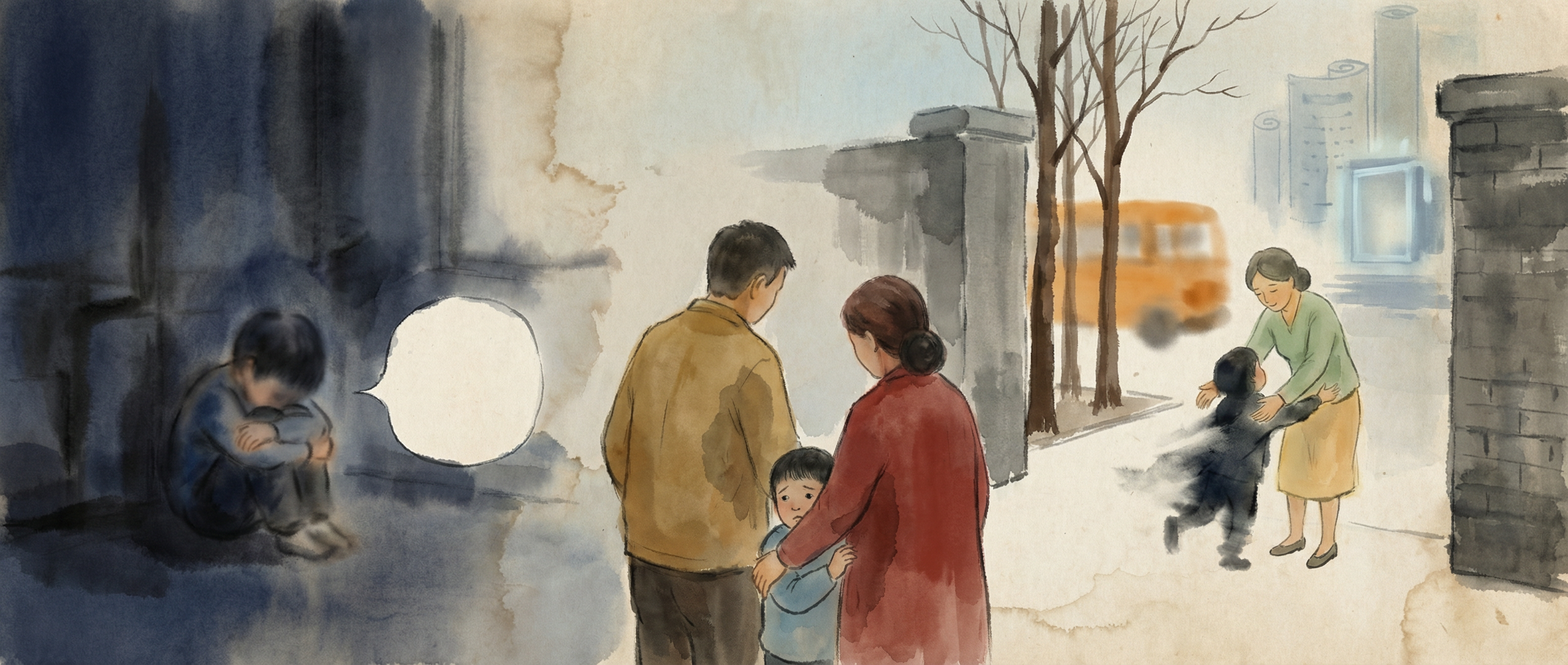
我们提前半小时到校,校门口冷清。只有偶尔出去接孩子的校车大声地轰鸣着。孩子蜷在我后面,眼神闪烁。联系班主任还未到校,我们转找教导主任,在他的陪同下才进入教室。上楼后,生活老师给了她一个大大的拥抱,熟悉、温暖,让她短暂卸下心防。
回到家里才拿起早上出门忘了带的手机,和她老师沟通才知道:平时在学校挺好的,作业、听写之类的大多满分。应该是对自己要求高,自己卷起来了。
我们听后释然了些,但还是搞不懂孩子为啥会如此害怕不交作业?
对自己要求高是好事,但是也不能是高到半夜惊醒多次,早上起来一直哭大声说害怕吧?这不仅仅是自己卷自己,但还有其他什么因素?为什么会把情绪绑定到是否完美做作业这件事情呢?
作为家长遇到孩子这种情况,是如何才能更好地帮到她呢?有哪些更科学、更系统的方法来短期应急,长期引导孩子呢?
于是乎到家休息一会儿后,开始看书、问起 AI 来.
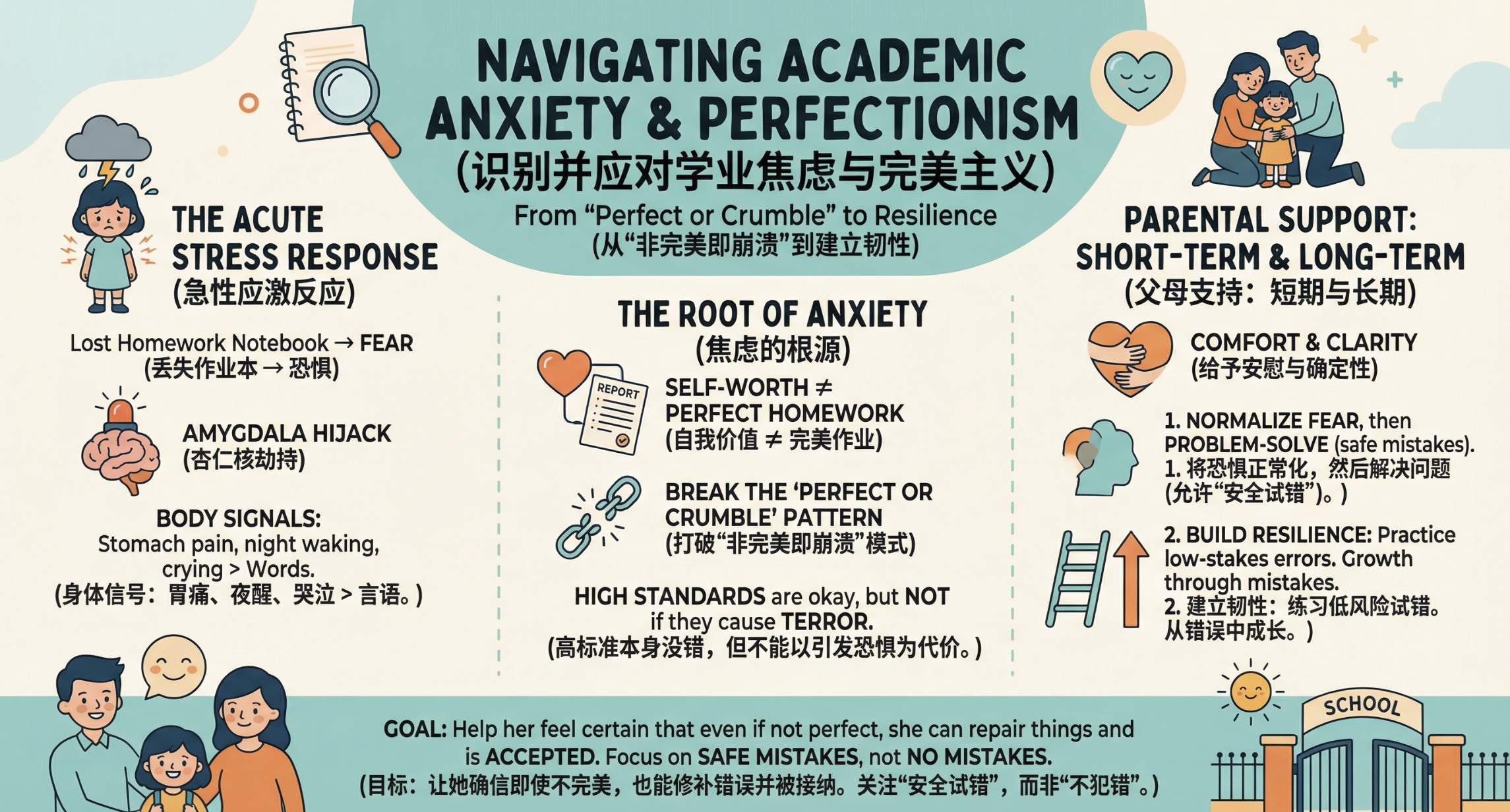
那么作为家长需要先拥抱,告诉她这是正常的害怕,然后再帮助找作业,如果找不到就写一封补交表给老师,把错误也能安全修复的方法教会孩子。然后尝试联系学校老师,协助沟通,解决孩子完美或崩溃的问题。
- 接纳躯体反应,减少恐慌
- 用一些聪明方法譬如补交卡替代不确定性,用行动解决问题
- 未来可以通过刻意犯错,重塑认知模型,从错误中成长
这些行动的目标不是把焦虑清零,而是让孩子非常确信:即使不完美,我也能修复、也同样被接纳。
作为家长尤其要注意孩子的教育方向不能发展成黑白简单分化的思维,协助孩子对不确定性的耐受能力。
而且作为家长我们解决问题的方式也被指出有问题:
开车送校虽然解决了当下的作业问题,但强化了焦虑,孩子没能通过错误自助建立心理韧性。 不是追求不犯错,而应追求安全地犯错。
当然,实际这些问题和建议家长应根据孩子的实时状态 切换不同策略,并不是说孩子已经完全不能去上学了,也依然让她自己解决。当时作为父母,我们此刻的想法是上学是一定要去的,遇到错误或问题,也是肯定可以解决的。但要她能立即自己解决没交作业导致的害怕,可能还需要实践。
毕竟小小的她一学期下来,也就两次没坐校车需要父母送去学校。 在我们眼里她已经足够优秀!
Last night, just before lights-out, my seven-year-old whispered that she was scared. The reason was concrete—she couldn’t find her homework notebook—and she was worried her teacher would criticize her the next day. We didn’t think much of it and sent her back to bed as usual. Less than an hour later, she was up again, sobbing, clutching her stomach, repeating, “I’m scared.” That’s when we realized her body was saying what her words couldn’t: “I need help.”
She woke repeatedly through the night, cried, and had stomachaches—signs that this wasn’t ordinary worry anymore, but a state she couldn’t resolve on her own.
In the morning, her mom and I exchanged a bleary-eyed look and landed on the same thought: we can’t let this turn into “I’m scared, so I don’t go to school.” What to do? We decided to drive her in.
“Come on, sweetheart. We’ll go to school together and look for your notebook. Who knows—maybe it’s sitting in the drawer waiting for you.”
We arrived half an hour early. The gate was quiet, save for the occasional school bus roaring past. Our daughter tucked herself behind me, eyes darting. The homeroom teacher wasn’t in yet, so we found the dean; with his help, we got into the classroom. Upstairs, the care teacher greeted her with a big, familiar, warm hug, and for a moment she let her guard down.
Only after we got home did I pick up the phone I’d forgotten that morning. Her teacher told us she’s usually doing very well—homework and dictations are often full marks. It sounds like she sets high standards for herself and is winding herself tight.
We felt relieved hearing that, but still wondered: why would missing one homework feel this terrifying?
- High standards are good—but not if they mean waking multiple times at night and crying in the morning from fear. So it’s not just “self-pressure.” What else is at play? Why has “perfect homework” become tied to her emotions and self-worth?
- As parents, how can we help? What’s a scientific, systematic way to support her—both short-term and long-term?
After a short rest, we turned to books and to AI.
So as parents, we start with comfort and clarity: hug her, normalize the fear, then help look for the notebook. If it’s truly lost, write a late-submission note to the teacher and teach her that mistakes can be repaired safely. Then loop in the school to coordinate expectations and help dismantle the “perfect or crumble” pattern.
- Accept the body’s signals and reduce panic.
- Replace uncertainty with concrete steps—like a “late submission card”—so action restores a sense of safety.
- Practice deliberate, low-stakes mistakes in the future to reshape her model of learning: growth comes through errors.
The goal isn’t to erase anxiety, but to help her feel certain: even if I’m not perfect, I can repair things—and I’m still accepted.
As parents, we should guard against black-and-white thinking and help her build tolerance for uncertainty.
We also had our own approach pointed out to us:
Driving her to school fixed the immediate problem but may reinforce the anxiety; she didn’t get to build resilience by working through the mistake herself.
Don’t aim for “no mistakes”; aim for “safe mistakes.”
Of course, strategy should always match the child’s real-time state. It’s not that we leave her to cope alone if she’s truly unable; we believed school was nonnegotiable and that problems can be solved. But expecting her to instantly self-resolve the fear of late homework may take practice.
And truth be told, in an entire semester she only skipped the school bus twice and needed us to drive her. In our eyes, she’s already plenty wonderful.
讨论
登录后可评论、点赞、引用回复。