刚跑完十公里回来,手机在口袋里震动了下,打开微信的那一刻,心还是不由自主地悬了一下。医院通知,CT 报告出来了。
我急急忙忙预约了回诊,像个急于求证分数的孩子,想从医生口中讨一个关于肺结节筛查的确切答案。赶紧开车又去了一趟医院。在这个充满消毒水气味的空间里,人总是显得格外渺小。
去的路上,我已经悄悄把报告里的那些晦涩词句告诉了 AI。那个理性的数字大脑给了我一个近乎安慰的结论:肉眼可见的“好转”。它说这更像是一个非常微小的良性结节,伴着轻微的纤维条索,还有那早已陈旧的肋骨骨折痕迹。
我心里的这块石头,却并没有那么干脆落地,那个“好转”被我狠狠地打上了引号。
人有时候就是这样矛盾,既盼着好消息,又生性多疑。原因还是对那些流水线般的体检中心总带着些许偏见,总觉得它们不如三甲医院那般严谨笃定。可当那个曾经让我揪心的、5mm*3mm 的磨玻璃结节凭空消失,当现在的结节小到几乎可以忽略不计时,不得不说,这又是一个自己盼望的结果。
究竟是身体里那些神秘的细胞发挥了自愈的魔法,悄悄抹去了痕迹?还是说,上一回的检查,本身就是一场虚惊一场的误判?
也许是我那谨小慎微的老毛病又犯了。我们总以为只要足够小心,就能避开命运的暗礁。但生活往往会给你上一课:这个世界有太多事情超出了你的认知边界,有时候,命运甚至不会给你小心的机会。你能做的,不过是在无常中,尽力抓住一点确定的东西。
回想最初,我远不是个好奇的探险家,仅仅想浅尝辄止看看跑步的数据,为何自己的最大摄氧量为何总是低得可怜。
可随着分析之锤一锤子凿开这座冰山,才发现底下藏着多么庞大的迷宫。个人信息、家族病史、历年的体检单……
它们不再是冷冰冰的纸张,而是你生命轨迹的刻度,是支撑你生命的支点。
不得不惊叹于 AI 的进化。它真的学会了像人类一样思考,甚至比我们更冷静。但它终究只是个工具,像个忠诚却木讷的仆人,听命于你。你喂给它多少信息,它就基于这些碎片,举一反三,给你一个局部的最优解。
而生而为人的智慧,恰恰在于不仅能看到那个解,还能以此为起点,在迷雾中摸索着向前,最终形成属于自己的认知。AI 在等下一个指令,而我们在等一个未来。
当我把那些关于体检的、关于血液的局部数据抛给它时,它也会困惑,也会语焉不详。哪怕是动用了 Gemini3 或是 GPT5 这样的模型,结果也常常让人哭笑不得:Gemini3 的措辞严厉得像个恐吓你的教导主任,看得人心惊肉跳;而 GPT5 则像个惜字如金的老学究,哪怕多说一个字都觉得有失严谨,让你云里雾里。
比如那令人抓狂的代谢指标,虽然还在中等风险的边缘试探,但 LDL(低密度脂蛋白)和 Hcy(同型半胱氨酸)的逆转苗头,像是在敲警钟;还有那反弹的炎症指标,AST(天门冬氨酸氨基转移酶)比 ALT(丙氨酸氨基转移酶)更明显的升高……
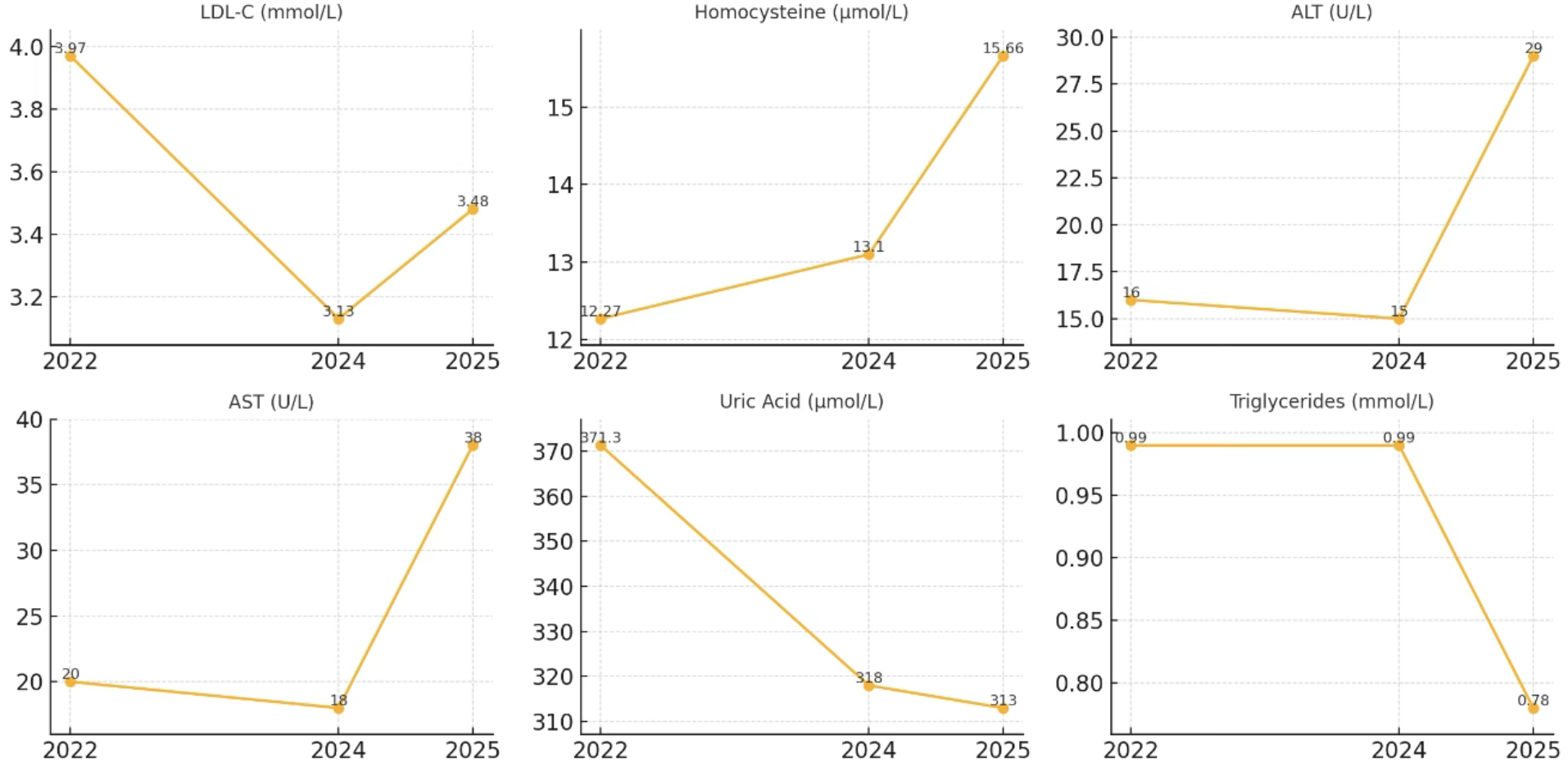
这些晦涩难懂的字母背后,其实是身体在委婉地抗议:可能是近期的生活方式太从心所欲了,也可能是剧烈运动后肌肉的悄悄哭泣,而非肝脏真的受了伤。
就这样,在等待报告、反复检查,在被 AI 恐吓又安慰的拉锯战里,一周的时间像过了一个世纪。
尘埃落定,好消息是:暂时无大碍,身体这台精密仪器的核心部件还在正常运转。 坏消息是:出来混,迟早是要还的。 以前偷过的懒、贪过的嘴、熬过的夜,现在都变成了一张张催款单。
用 AI 那个耿直的话翻译过来就是:要么现在开始流汗锻炼,要么将来等着坐轮椅。话虽糙,理却在这个初冬的寒意里显得格外清醒。
于是,我默默地,又郑重地,给自己整了一版新的锻炼计划。这不仅仅是一份计划,更像是与自己身体签下的一份停战协议与和解书。毕竟,在这漫长的一生里,能陪你走到最后的,唯有这具独一无二的肉身。
周计划 #
Mon – 恢复日 / 技术日 心率控制在 ≤130,步频170–176,跑 4 公里。专注轻、快、安静落地
- 收尾 4×20s 轻快加速,每冲刺 20 秒走路 2分钟
Tue – 负重爬山 负重不超过 体重的 10–15%(8–12kg)
- 骑车来回分别 10 分钟
- 不负重下山
Wed – 核心长距离日 高端 Zone2 长距离 心率控制在 132–138
- 最后 1km 提速一点(比如配速 7 分左右,但心率不爆表)
- 不要多次冲刺
- 等这套量完全“没压力”后,再在最后 10 分钟插入 2×30s 轻快跑
Thu – 负重爬山 负重不超过 体重的 10–15%(8–12kg)
- 骑车来回分别 10 分钟
- 不负重下山
Fri - 中等距离 Zone2 10 公里 心率控制在 132–138
- 收尾4×20s 冲刺
- 每次冲刺中间散步 2 分钟
Sat – 带娃爬山 5h:当成黄金 Zone 1 日
- 真的是陪娃 + 享受 + 轻松动。
- 心率往往都是 Zone1 + 下限 Zone2
- 时间超长 → 线粒体 & 脂肪代谢大加成
- 而且情绪非常好,对整体压力荷尔蒙有保护作用
如果有连续一周以上: • 早上心率上升 5–10 • 睡觉变差 • 腰背老是紧到不舒服
那就说明:现在这套量是偏多了,应该立刻来一周减量。
用 3 个小指标,判断这周是不是练多了
- 早晨静息心率(RHR)比你自己的平稳值高出 ≥5 bpm 且持续 3 天 → 下一周立刻减量一档(尤其是 Fri)。
- 入睡明显变慢(>30 分钟)半夜经常醒来 白天总觉得易怒、疲惫、专注力下降 ⇒ 说明压力 + 训练负荷超过了当前恢复能力。
- 如果第二天、第三天依旧有持续疼、发紧、甚至影响走路 ⇒ 说明冲击量太大,要么缩短 Wed/Fri 的跑量,要么某一周取消一次负重爬山。
每 4 周给自己一周减量——这样才能既跑得久、又跑得快
When AI Diagnoses My Lungs: Data, Doubt & a Re-engineered Fitness Plan #
I had just finished a ten-kilometer run when my phone buzzed in my pocket. The moment I opened WeChat, my heartbeat flickered—an involuntary catch in the chest. The hospital had sent word: my CT scan results were in.
I booked a follow-up appointment immediately, like a restless child desperate to see an exam score, eager to hear a definitive verdict on my lung nodule from the doctor himself. I drove back to the hospital. In that air thick with disinfectant, people always seem smaller, almost fragile.
On the way, I slipped the report’s cryptic phrases into an AI’s digital mind. Its reply was measured, almost consoling: “Visible improvement.” A tiny, likely benign nodule, a faint fibrous strand, and the ghost of an old rib fracture.
But that “improvement,” in my mind, came wrapped in quotation marks.
We humans are walking contradictions—hungry for good news, but quick to suspect. Perhaps it’s my lingering distrust of conveyor-belt health check centers, never quite believing they match the precision of top-tier hospitals. And yet, when the once-troublesome 5mm × 3mm ground-glass nodule vanished as if erased, and the current speck shrank to near nothing, even I had to admit: this was exactly the outcome I’d been hoping for.
Was it some hidden magic at work—cells quietly rewriting their own fate? Or just a false alarm last time, a misread masquerading as danger?
Maybe it’s my old habit of treading too carefully, clinging to the illusion that meticulousness can outwit the reefs of fate. But life has its own curriculum: there are too many things beyond what you can see, and sometimes fate won’t even wait for your caution. All you can do is try to anchor yourself to one solid thing in the drifting seas of uncertainty.
I wasn’t trying to be an explorer at first. I only wanted to peek at my running stats—how could my VO₂ max be so embarrassingly low?
Then, bit by bit, I discovered the iceberg’s hidden body—a labyrinth beneath the surface: personal details, family histories, years of records… They stopped being just cold sheets of paper. They became markers along my life’s timeline, scaffolds holding up existence.
AI, for all its evolution, still feels like a loyal but literal-minded servant. It thinks with an impressive calm, yet only within the borders you set. Feed it fragments, and it will stitch together the best guess those fragments allow.
Human intelligence lies not merely in reading its answer, but in starting from there—feeling your way through the fog toward an understanding that’s your own. AI waits for the next command. We wait for the future.
Even with Gemini 3 or GPT-5, their personalities make me smile: Gemini 3 scolds like an overzealous school disciplinarian; GPT-5 is as stingy with words as an old scholar, sacrificing clarity for precision.
Those maddening metabolic markers—hovering at the edge of moderate risk. LDL and Hcy waving their small red flags, inflammation measures climbing again, AST more than ALT… Behind those sterile letters, the body whispers its gentle protest: maybe I’ve been living too freely lately, or perhaps it’s just my muscles crying softly after hard training—not the liver, not this time.
And so the week dragged on, caught between the AI’s warnings and its reassurances, the slow grind of waiting, testing, waiting again. Time felt viscous—as if a century had been poured into seven days.
Now the dust has settled: good news—no major issues for now; my body’s core machinery is still humming. Bad news—every tab eventually comes due. The lazy afternoons, the indulgent dinners, the stolen hours from sleep—they’ve all reappeared as invoices you cannot ignore.
In AI’s blunt translation: sweat now, or buy the wheelchair later. Harsh words, yes—but crystal-clear in the chill of early winter.
So I drew up a new training plan. Not just a plan, but a truce—an armistice between me and my own flesh. After all, in the long journey, there’s only one companion who walks every step with you: this one irreplaceable body.