最近花了不少时间研究怎么能更科学地折腾自己的身体,结果发现了一个非常有意思的组合:175 步频 + Zone 2 心率。
这听起来像是一串枯燥的代码,但对于哪些被办公椅封印了下半身、每天都在和颈椎病博弈的白领来说,这可能是一份迟到的康复指南。它指向了一个非常宏大的目标:如何在身体耐受度越来越低的今天,用最小的代价,换取最大的健康收益。
人体是一台精于计算的机器 #
首先,我们得达成一个共识:锻炼的本质,是用时间成本换取健康收益。 那么如何以最低的关节磨损和代谢压力,换取最长时间的高质量重复运动就成了关键目标。
这其实是个很严肃的生存策略。看看周围,有多少人因为瞎练把自己送进了骨科?没热身就上大重量,或者在跑道上像无头苍蝇一样乱冲,最后捧着半月板损伤的诊断书怀疑人生。这在生物学上看是非常不划算的:你本来想通过运动对抗熵增,结果却加速了身体的报废。
但我们又不得不动。随着年龄增长和长期久坐,身体就像一台生锈的机器:胰岛素敏感度下降,血管弹性变差,脂肪代谢迟滞。我们需要一种既能除锈,又不会把引擎干爆的方法。 在翻阅了大量运动生理学文献,并和 AI 进行了无数次探讨后,175 步频 + Zone 2 这个结论浮出了水面。
175 步频:关于共振的生物物理学 #
很多人可能会质疑:把 175 的步频强加给一个 1米9 的大高个,或者 1米55 的初学者,这难道不是反生物力学吗?
这里有两个有趣的生物学视角。 第一,神经可塑性。跑步步态并非天生刻在基因里的死板程序,它是反射性的。你迈出的每一步,都在向大脑强化这个神经回路。无论你的腿长如何,大脑都能通过训练适应新的节奏。 第二,175 不是一个死数字,它代表的是 170-180 这个区间。你不需要像机器人一样精准,只要在这个区间里找到那种自然顺畅,平稳自如的节奏即可。
为什么要高步频(175)? 也就是每分钟迈出 175 步。很简单,步频越快,你腾空的时间就越短,身体重心上下起伏(垂直振荡)的幅度就越小。这意味着膝盖和脚踝承受的冲击力被物理学削减了。同时,落地点更靠近重心,减少了脚掌带来的刹车效应,动能保持率更高。
更妙的是,这是人类进化的秘密:我们小腿肌腱的天然弹性回缩频率,刚好就在 170-180 之间。当你维持这个频率时,你不仅是在用肌肉跑,你是在利用肌腱的弹性势能。这就像你找到了身体的共振频率,在某种程度上,你在利用物理定律赋予的能量。
Zone 2:被误解的垃圾时间 #
再来说说 Zone 2。很多人觉得这种轻松跑是垃圾跑量,因为它太慢了,当然也不至于慢到让你怀疑人生。 但运动科学家 Dr. Stephen Seiler 发现,顶尖运动员 80% 的时间都在做这种低强度训练。这就是著名的 80/20 法则。对比实验显示,这种方案的效果,比那些每次都把自己练得半死的人好出一倍。
为什么?因为 Zone 2 是线粒体的动员大会。 它能大幅增加细胞内线粒体的密度,让你的肌肉变成一台高效的燃脂机器,而不是只会烧糖的脆皮。这才是耐力的底层逻辑。
更关键的是,只有在 Zone 2 这种低压力环境下,你的大脑才有余力去感受和监控你自身的跑姿。如果在高心率下,大脑会进入求生模式,根本无暇顾及动作优化。Zone 2 给了我们一个窗口,把 175 步频从刻意练习内化为潜意识本能。
进化的尴尬与和解 #
有人担心,一直 175 的速度这么小碎步跑,会不会导致步幅太小,像个裹脚老太太,长期来看就失去了运动爆发力了? 其实,这种风险更多来自我们久坐的生活方式,而不是慢跑本身。我们的髋部肌肉因为长期坐着而退化、僵硬,这才是步幅缩短的元凶。Zone 2 慢跑,恰恰是在温和地唤醒这些沉睡的肌肉,而不是带来更多缺陷。
当然,生命在于平衡。为了防止身体在安逸中彻底丧失爆发力,我们也需要那 20% 的刺激。比如每周安排一点 Zone 3 或 Zone 4/5 的强度跑。
一份长期训练样本 #
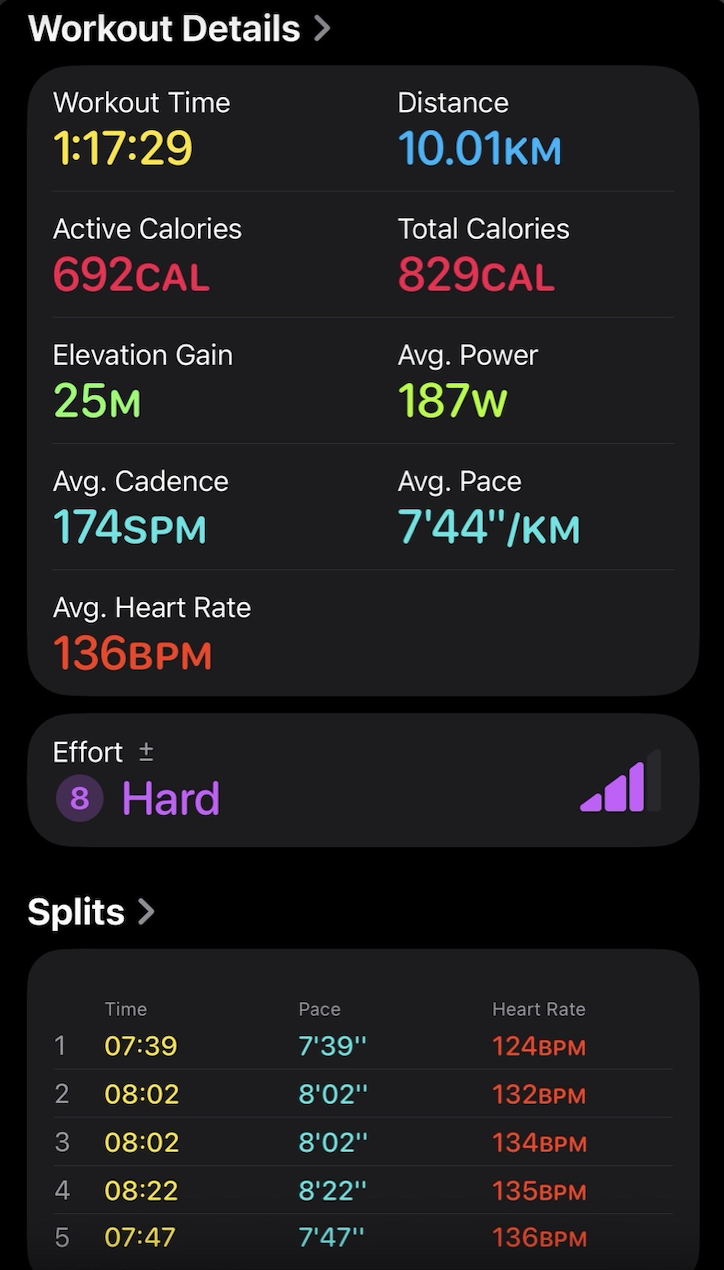
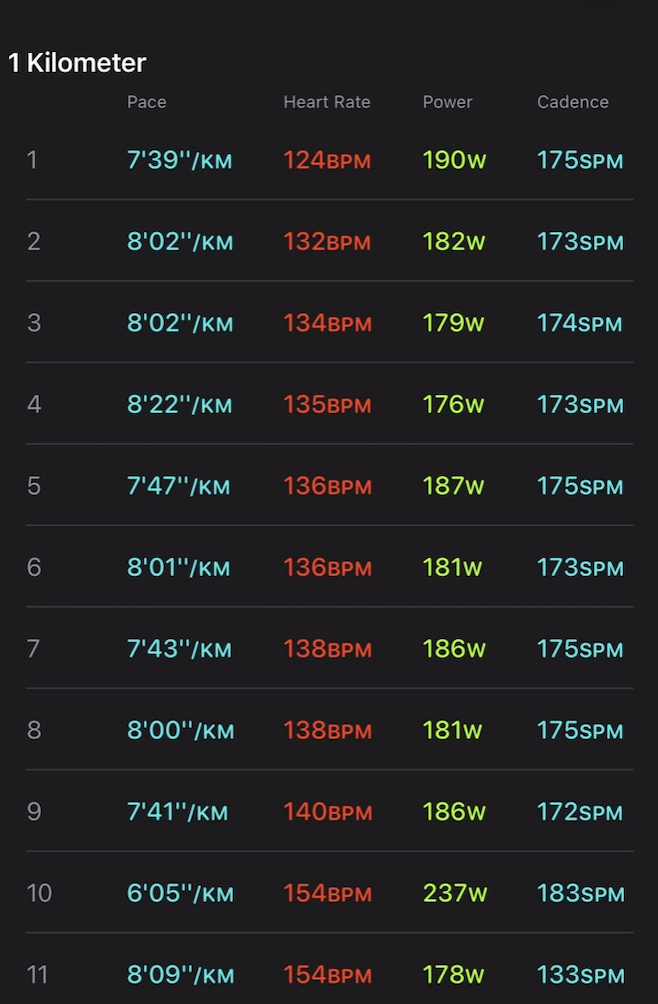
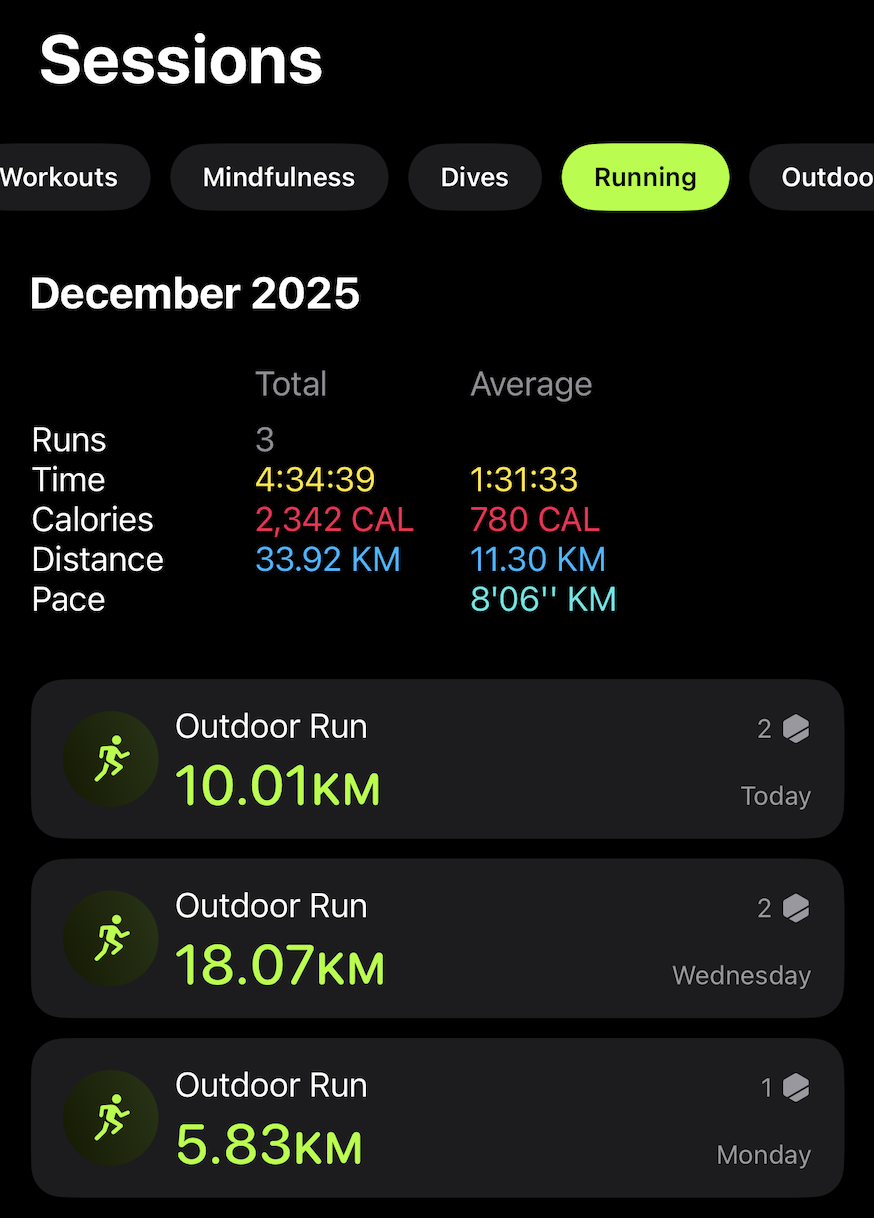
如果不算那些复杂的术语,以每周 31 公里为例,我目前给自己的’康复’计划大概是这样的:
周一(6km): 稍微冲一冲,给身体一点无氧的信号(Zone 2 热身 + 间歇跑)。 周三(15km): 纯粹的 Zone 2 长距离,这是给线粒体扩容的时间。 周五(10km): 门槛跑,在舒适区边缘试探一下。
为啥说康复,主要还是工伤啊...
最后的思考 #
175 步频 + Zone 2,在我看来,不仅仅是一个简单训练公式,它更像是一种长期主义的生存哲学。
它最大化了能量利用率,构建了一个韧性极强的有氧底盘。在这个充满焦虑和不确定性的时代,我们大部分人都卡在中间:既没有真正的松弛,也没有真正的刻苦。
这时候,放慢脚步,不是妥协,而是为了在漫长的生命马拉松里,构建一个不会强大的的系统,从而为抵达更高、更远的地方,努力着。
1752: The Numeric Code for Long-Term Fitness #
I’ve recently spent a lot of time researching how to optimize my body through science, and I stumbled upon a fascinating combination: 175 Cadence + Zone 2 Heart Rate.
It sounds like a boring string of code. But for white-collar workers whose lower bodies are held captive by office chairs and who battle cervical spine issues daily, this might be the delayed rehabilitation guide you’ve been waiting for. It points toward a grand objective: In an era where our physical tolerance is plummeting, how do we exchange the lowest cost for the maximum health return?
The Body is a Calculation Machine #
First, let’s reach a consensus: the essence of exercise is trading time costs for health benefits. Therefore, the key goal is to figure out how to exchange minimal joint wear and metabolic stress for the longest duration of high-quality, repetitive movement.
This is actually a serious survival strategy. Look around you—how many people have sent themselves to the orthopedic ward due to reckless training? Lifting heavy without warming up, or sprinting around the track without direction, only to end up clutching a diagnosis of a meniscus tear while questioning their life choices. Biologically speaking, this is a terrible deal: you intended to fight entropy through exercise, but instead, you accelerated your body’s obsolescence.
Yet, we have no choice but to move. With age and prolonged sitting, the body becomes a rusting machine: insulin sensitivity drops, blood vessel elasticity degrades, and fat metabolism lags. We need a method that removes the rust without blowing out the engine. After reviewing extensive exercise physiology literature and having countless debates with AI, the conclusion of 175 Cadence + Zone 2 surfaced.
175 Cadence: The Biophysics of Resonance #
Many might question this: Is forcing a cadence of 175 steps per minute on a 6'3" giant or a 5'1" beginner anti-biomechanical?
Here are two interesting biological perspectives.
First, Neuroplasticity. Running gait isn’t a rigid program hard-coded into your genes; it is reflexive. Every step you take reinforces a neural circuit in your brain. Regardless of leg length, the brain can adapt to a new rhythm through training.
Second, 175 isn’t a fixed number; it represents the 170–180 range. You don’t need robotic precision—just find a rhythm within this interval that feels natural, smooth, and steady.
Why high cadence (175)?
Simply put, the faster your cadence, the shorter your airtime. This minimizes the vertical oscillation (up-and-down movement) of your center of gravity. Physically, this slashes the impact force on your knees and ankles. Simultaneously, your landing point is closer to your center of gravity, reducing the “braking effect” of the footstrike and maintaining higher kinetic energy.
Even better through, this is an evolutionary secret: the natural elastic recoil frequency of our calf tendons sits exactly between 170 and 180. When you maintain this frequency, you aren’t just running with muscle; you are utilizing the elastic potential energy of your tendons. It’s like finding your body’s resonance frequency—in a way, you are harnessing energy granted by the laws of physics.
Zone 2: The Misunderstood “Junk Miles” #
Let’s talk about Zone 2. Many people consider this type of easy run to be “junk miles” because it feels too slow—though not slow enough to make you doubt reality. However, sports scientist Dr. Stephen Seiler discovered that elite athletes spend 80% of their time doing this low-intensity training. This is the famous 80/20 Rule. Comparative experiments show that this approach yields results double that of plans where athletes push themselves to the brink every session.
Why? Because Zone 2 is a mass mobilization for your mitochondria.
It significantly increases mitochondrial density within cells, turning your muscles into efficient fat-burning machines rather than fragile sugar-burners. This is the underlying logic of endurance.
More critically, only in the low-stress environment of Zone 2 does your brain have the spare capacity to feel and monitor your running form. Under high heart rates, the brain enters survival mode and has zero bandwidth for optimizing movement. Zone 2 gives us a window to internalize the 175 cadence from deliberate practice into subconscious instinct.
Evolutionary Awkwardness and Reconciliation #
Some worry: “Will running with such small, quick steps (175 cadence) make my stride too short? Will I look like an old lady with bound feet and lose my explosive power in the long run?”
Actually, this risk stems more from our sedentary lifestyle than from slow jogging. Our hip muscles have atrophied and stiffened from long-term sitting—that is the true culprit behind shortened strides. Zone 2 jogging is actually gently waking up these dormant muscles, not creating more defects.
Of course, life is about balance. To prevent the body from losing explosiveness amidst comfort, we also need that 20% stimulation. For example, scheduling a bit of Zone 3 or Zone 4/5 intensity running each week.
A Sample for “Long-Termism” Training #
Stripping away the complex terminology, and taking a weekly volume of 31km as an example, my current “rehab” plan looks something like this:
- Monday (6km): A slight push to give the body an anaerobic signal (Zone 2 Warm-up + Intervals).
- Wednesday (15km): Pure Zone 2 long distance—time for mitochondrial expansion.
- Friday (10km): Threshold run—testing the waters at the edge of the comfort zone.
Why call it rehab? Mainly because office work is essentially an occupational injury...
Final Thoughts #
To me, 175 Cadence + Zone 2 is not just a simple training formula; it is a philosophy of survival based on long-termism.
It maximizes energy efficiency and builds an incredibly resilient aerobic chassis. In this era filled with anxiety and uncertainty, most of us are stuck in the middle: neither truly relaxed nor truly disciplined.
In these times, slowing down is not a compromise. It is an effort to build a system that won’t break, allowing us to reach higher and farther places in the long marathon of life.